Seoul Travel Guide: Everything You Need to Know Before You Travel
Things to do
Things to do

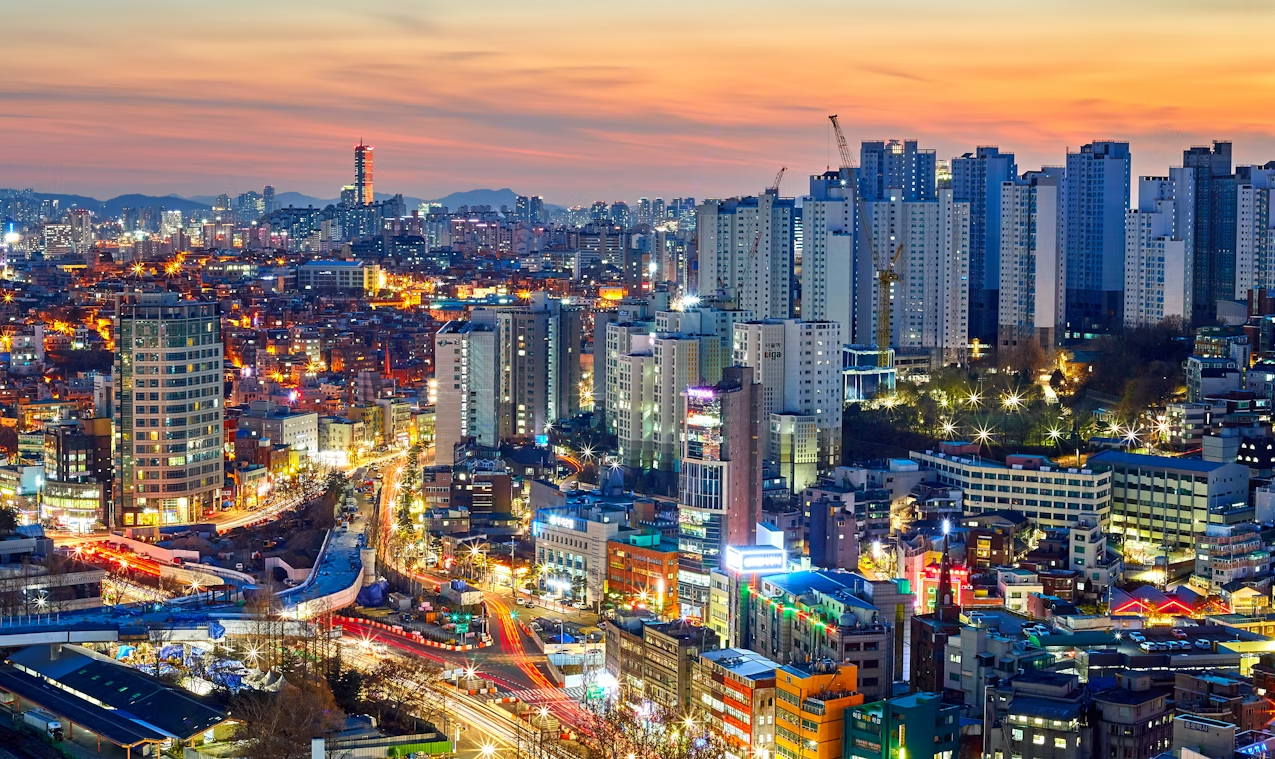
The capital of Korea is one of the most dynamic cities on the planet. Ancient palaces sit in the shadow of glass skyscrapers. Buddhist temples nestle between convenience stores that never close. World-class cuisine pours out of underground food markets and onto neon-lit streets, all just a short flight and a one-to-two-hour time difference from the Australian east coast.
Whether you're planning a trip to Seoul for the first time or heading back for another visit, this guide covers everything you need to know, from landing at Incheon International Airport to making the most of your final evening in the city.
Most international visitors, including those flying in from Australia, land at Incheon International Airport, which is consistently ranked among the best airports in the world. From there, the city centre is only about an hour away on the Airport Railroad Express (AREX), which runs directly to Seoul Station and Hongik University Station. Taxis and airport limousine buses are also widely available.
Before you leave the arrivals hall, pick up a T-money card. It's a rechargeable card that works across the metro, buses and even some taxis and convenience stores, and it will save you plenty of time and money during your visit. You can top it up at any subway station or at the thousands of convenience stores dotted around the city. Think of it as Seoul's version of an Opal, myki or Go card.
Be aware that Google Maps has limitations in South Korea because of national mapping data restrictions. It works for basic walking directions and place searches, but it's far less reliable for public transport routing than local alternatives. Download Naver Map or Kakao Map before you arrive. Both are available in English and will guide you accurately around Seoul's excellent public transport network.
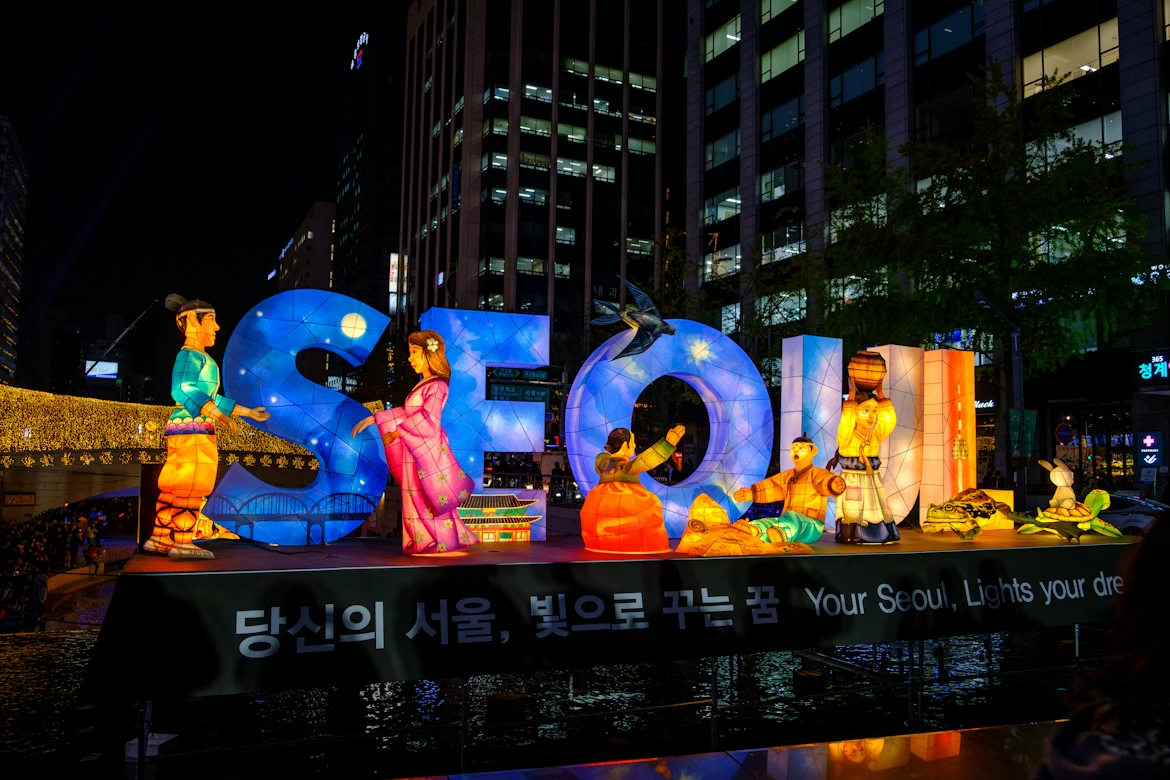
Seoul's subway is one of the best urban rail networks in the world, known for being clean, punctual and easy to navigate in English. For most visitors staying in central Seoul, the metro is almost always the fastest option. Buses fill in the gaps, and ride-hailing apps like Kakao T are especially handy for late-night journeys.
Seoul runs on Korea Standard Time (KST), which is UTC+9. There's no daylight saving, so the time difference with Australia shifts during the year. Seoul is one hour behind Sydney and Melbourne in standard time and two hours behind during daylight saving, and one hour ahead of Perth all year round.
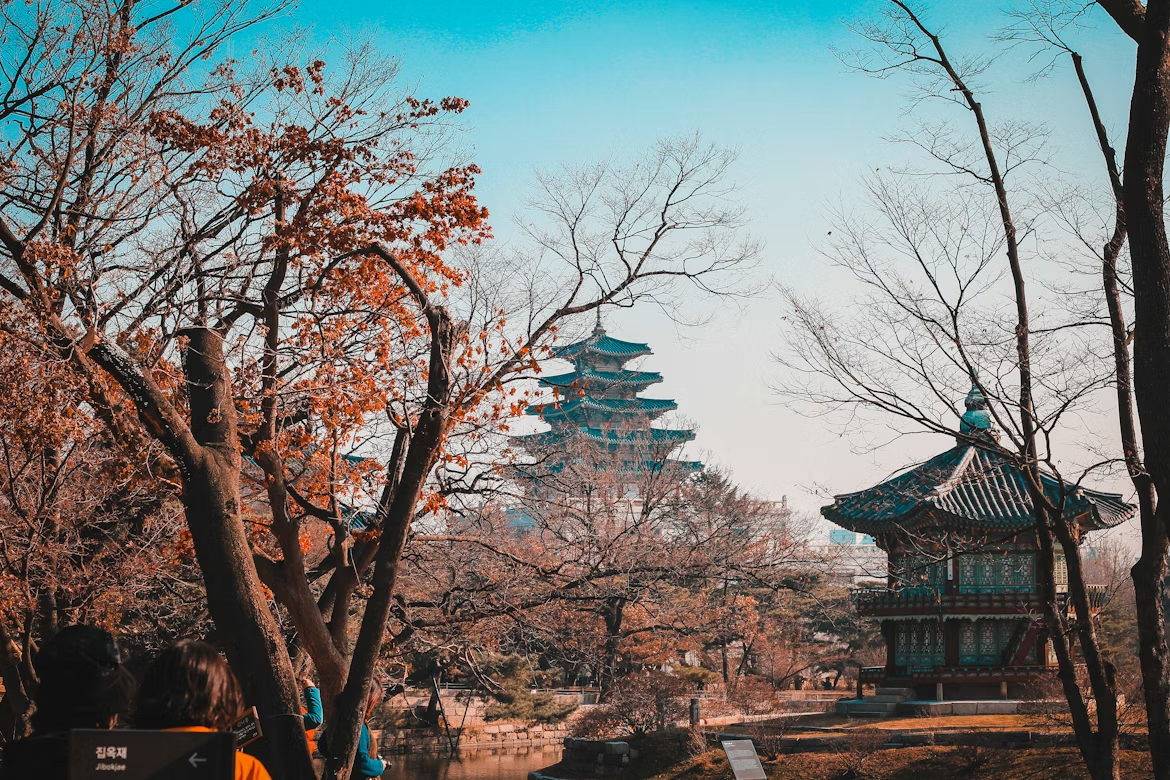
No trip to Seoul is complete without a visit to Gyeongbokgung Palace, the largest and grandest of the five Joseon-era palaces. We suggest arriving early to catch the guard ceremony at the main gate, a vivid, choreographed re-enactment performed by soldiers in full traditional dress. Even better, admission to the palace is free if you're wearing a traditional hanbok, which you can hire from the many shops near the entrance.
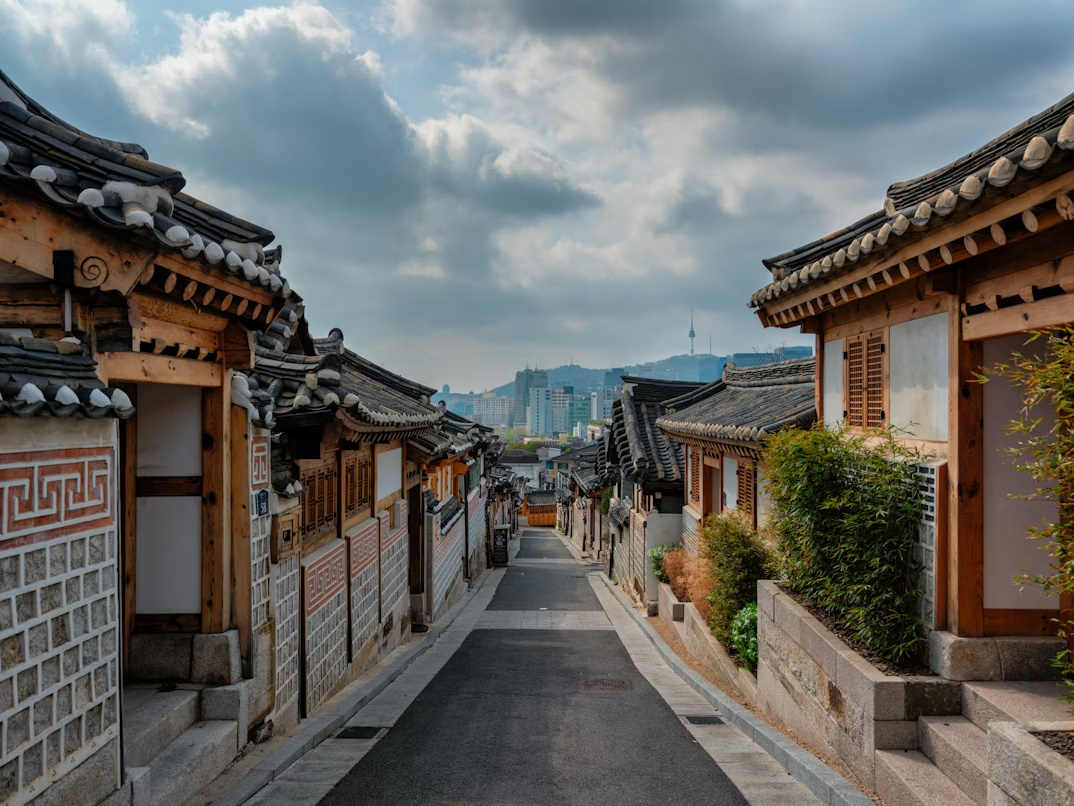
From the palace, a short walk northeast brings you to Bukchon Hanok Village, a hillside neighbourhood of beautifully preserved traditional hanok houses. Its narrow alleys offer some of the most photographed views in the city, especially at sunrise before the crowds arrive.
Just as spectacular is Changdeokgung Palace, a UNESCO World Heritage Site and, many locals would argue, the most beautiful palace in the country. The highlight is the Secret Garden, a roughly 32-hectare landscape of pavilions, lotus ponds and ancient trees that has served as a royal retreat for centuries. The Secret Garden can only be visited on a guided tour, which must be booked in advance.
Rising above the city centre is Namsan Park, a forested hill with some of the best panoramic views in the capital. At the summit, Seoul Tower has an observation deck overlooking the Han River and the mountains beyond. You can reach the top by cable car from the Myeongdong side, or hike up through the park if you're up for the 40-minute walk.
Designed by Zaha Hadid, the Dongdaemun Design Plaza (DDP) is a landmark of contemporary architecture and one of the most important creative hubs in Seoul. Its sweeping, futuristic form houses galleries, exhibition spaces and a design museum dedicated to the city's thriving contemporary art and fashion scenes. Entry to the grounds is free, though individual exhibitions may charge an extra fee.
If you're interested in the city's art scene, the Leeum Museum of Art in Hannam-dong is well worth adding to your itinerary. The collection spans traditional Korean ceramics and Buddhist art alongside blue-chip modern and contemporary works. Designed by three different architects, the building complex is a work of art in its own right.
Ikseon-dong is a neighbourhood in Jongno known for its network of early twentieth-century alleys, which has gradually evolved into one of the city's most distinctive café and dining districts. Traditional houses along its narrow streets now host everything from classic Korean tteok to specialty coffee, and Australian coffee lovers will find plenty of cafés serving a proper flat white. The area is also known for its salt bread, a soft, buttery roll with a subtle savoury finish that has become a Seoul food trend.
Seongsu-dong, often compared to Brooklyn (or, if you're from Melbourne, Collingwood), is widely considered one of Seoul's leading creative districts. Former factory buildings have been turned into independent coffee roasters, concept stores, galleries and design studios. The neighbourhood is especially known for its street art, with large-scale murals adding character to the industrial landscape.
For a window into cutting-edge South Korean retail and culture, head to COEX Mall in Gangnam, one of the largest underground shopping complexes in Asia. Inside, the Starfield Library is a breathtaking installation of floor-to-ceiling bookshelves and one of the most photographed interiors in the city. Best of all, it's free to enter.
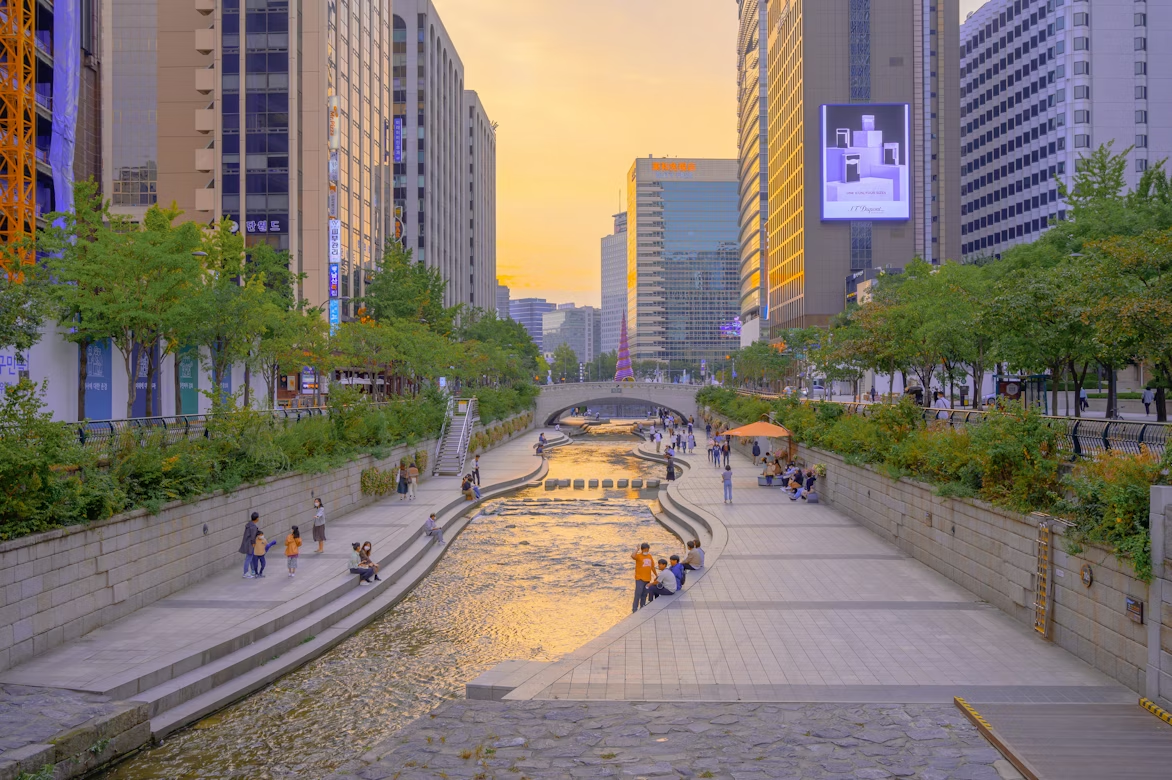
Seoul's food scene is remarkable for both its depth and its diversity, with experiences that reflect the city's rich culinary heritage and modern creativity.
Gwangjang Market is one of the oldest food markets in Seoul. This covered arcade is filled with food stalls serving dishes such as bindaetteok (a savoury mung bean pancake), mayak gimbap and some of the freshest raw fish in the city. It's a great destination for anyone keen to explore traditional Korean street food.
Namdaemun Market, the largest traditional market in Seoul, is another must-visit. Its sprawling network of stalls sells everything from clothing and textiles to popular street foods like hotteok, a sweet-filled pancake, all at very reasonable prices.
For evening dining, the night market at Banpo Han River Park is a favourite with locals, especially in summer. The street food areas in Hongdae and Sinchon also stay lively late into the night, with a wide variety of casual eats.
Fried chicken holds a special place in Seoul's food culture. It's typically double-fried for a crisp texture, then coated in sauces such as soy garlic or sweet chilli, and usually washed down with beer, a pairing known locally as chimaek. Chains such as BBQ Chicken and Kyochon are widely available, but many independent neighbourhood spots are equally celebrated, if not more so.
Last but not least, don't underestimate the convenience store experience in Seoul. Chains like GS25, CU and 7-Eleven stock freshly made kimbap, instant ramyeon cooked in-store, triangle sandwiches and a wide range of hot snacks, all at very low prices. It's a far cry from the servo pie, and Koreans use them regularly, so you should too.
A day trip to Nami Island is one of the most popular excursions from the capital. About 90 minutes northeast by train and ferry, this small, picturesque river island is known for its tree-lined avenues, which are especially stunning when the cherry blossoms arrive in late March and early April. The island is also famous for its link to the beloved Korean drama Winter Sonata.
The historic fortress city of Suwon, the traditional village of Jeonju and the coastal city of Incheon (only 30 minutes from central Seoul) all make rewarding day trip destinations.
Google Maps is restricted in South Korea by national security legislation that forbids the export of detailed mapping data to foreign companies. As a result, Google can't access the same level of detailed map data as local providers, which makes its turn-by-turn navigation and public transport routing far less accurate. Local apps like Naver Map and Kakao Map are available in English and are much more reliable.
Locals and long-time visitors rate Namsan Park as one of the best places in the city to sit and relax. The wooded slopes offer quiet benches with views across the skyline, a world away from the bustle of the city centre. For a more urban vibe, the grassy banks of the Han River at Yeouido or Banpo are hugely popular with Seoulites who come to picnic, cycle and watch the light change over the water.
A week in Seoul gives you enough time to visit the major palaces (Gyeongbokgung and Changdeokgung with its Secret Garden), Bukchon Hanok Village, Namsan Park and Seoul Tower, the Dongdaemun Design Plaza and the Leeum Museum of Art. Spend an afternoon at Gwangjang Market and another at Namdaemun Market.
We also suggest dedicating at least one full day to wandering Ikseon-dong, Seongsu-dong and the Starfield Library at COEX Mall. Set aside one day for a trip to Nami Island, and use your final evening for a proper chimaek dinner followed by a walk through the Hongdae night market.
The list of must-try dishes in Seoul is virtually endless, but a few stand out. They include Korean fried chicken, often enjoyed with beer as chimaek, as well as shabu shabu, bibimbap and samgyeopsal, which is grilled pork belly.
Other highlights include tteokbokki, a spicy rice cake dish, and bindaetteok, a savoury mung bean pancake commonly found at Gwangjang Market. You should also try cold naengmyeon noodles, along with well-known street food like hotteok, odeng and tornado potatoes.
For a more refined meal, Korean barbecue at a reputable restaurant never disappoints and is often a highlight of any visit. And no trip to Seoul would be complete without trying the popular salt bread in Ikseon-dong.
Spring, from late March to early May, and autumn, from September to November, are widely regarded as the best times to visit. Cherry blossoms appear in late March and early April, a striking seasonal highlight that can line up with Easter holidays at home, and the weather is mild and comfortable. Autumn brings clear skies, cooler days and vibrant foliage across the city's parks, and September and October fit neatly with Australian spring school holidays.
June to August is typically hot and humid, with a monsoon period in July, which overlaps with the Australian winter school holidays. Despite this, the city stays lively, with plenty of festivals and events. Winter, from December to February, is cold and dry, so pack proper layers, but snowfall adds to the atmosphere of historic sites like the palaces, while indoor dining and cultural activities become especially appealing.
Hongdae, around Hongik University, is widely recognised as the centre of Seoul's youth nightlife. It has a high concentration of clubs, live music venues, bars and late-night street food, making for an energetic and accessible night out.
Itaewon is known for its international character and diverse range of venues, with a welcoming atmosphere and a broad selection of bar styles. Gangnam, particularly Apgujeong and Cheongdam, is associated with a more upscale nightlife scene, including premium clubs and lounges.
For a more relaxed atmosphere, Hannam-dong has a wide choice of rooftop bars, while Yeonnam-dong is increasingly popular for its wine bars and creative, laid-back vibe.