The Perfect Italian Road Trip
Car & road trips
Car & road trips

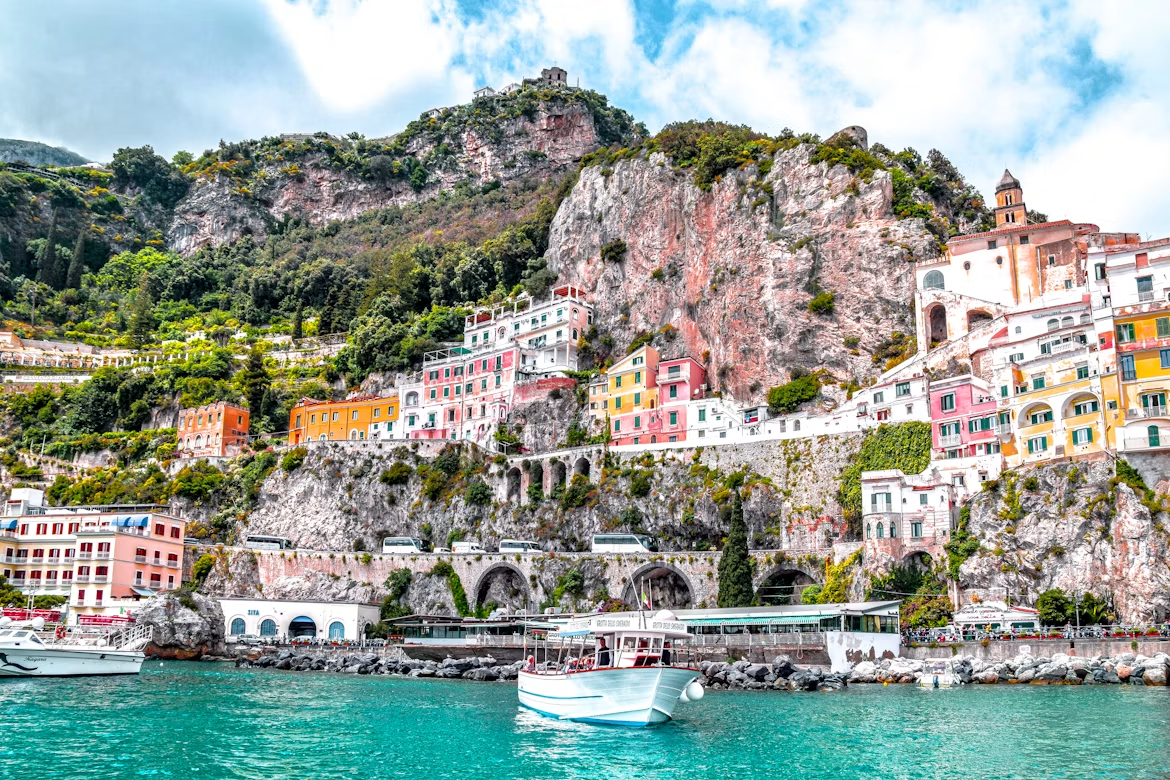
This is no ordinary Italian road trip. It's an 18-day coastal loop built on variety, from UNESCO-listed cities and quiet hill towns to volcanic landscapes and some of the best food and wine in Europe, all linked by routes that reward spontaneity as much as planning. If you're making the long journey from Australia, it's worth making it count. Driving through Italy gives you the freedom to explore beyond the beaten track and turn a string of destinations into the holiday of a lifetime.
Most Italian road trips stay on the mainland and treat Sicily and Sardinia as separate holidays reached only by plane. That's a shame, because both islands were made to be entered by ferry, the way generations of Italians have always arrived.
Car ferries make it possible without ever handing back your rental keys. You drive onto the boat in Naples, sleep in an onboard cabin, and drive off in Palermo the next morning in your own car.
This itinerary combines three of Italy's best driving regions — the Amalfi Coast, Sicily and Tuscany — with two islands most road trippers skip, linked by four ferry crossings that range from a one-hour hop to an overnight sailing. It's ambitious but realistic: eighteen days, approximately 2,330 kilometres of driving, and enough breathing room that a missed connection or a long lunch won't derail the whole trip. And with an international flight already behind you, an itinerary that covers this much ground makes the most of every day away.
Allow a minimum of two and a half weeks for this road trip. As for when, late May to mid-June and September to early October are the best times to go. It's warm enough to swim, cool enough to hike a volcano, and quiet enough that you can still get a table without a reservation. The September–October window also lines up nicely with Australian school holidays, while the shoulder season in May and June lets you swap an Australian winter for an Italian early summer.
We suggest renting a mid-size sedan or small SUV, as Italian coastal roads and hill towns were not designed with wide wheelbases in mind. Most rental cars in Italy are manual, so if you'd rather drive an automatic, book early and expect to pay more. Book your rental car and your first two ferry crossings before you leave home.
| Route / Stretch | Travel Details | Suggested Days |
|---|---|---|
| Rome → Amalfi Coast | Approx. 3.5 hours by road | 3 days |
| Naples → Palermo | Overnight ferry, approx. 10–11 hours | 1 day |
| Sicily Loop (Palermo – Mount Etna – Syracuse – Agrigento – Palermo) | Approx. 530 km by road | 3 days |
| Palermo → Cagliari | Overnight ferry, approx. 12 hours | 1 day |
| Sardinia Loop (Cagliari – Costa Smeralda – Alghero) | Approx. 480 km by road | 3 days |
| Olbia → Livorno | Day ferry, approx. 9–10 hours | 1 day |
| Tuscany + Cinque Terre | Approx. 240 km by road | 3 days |
| Piombino → Elba | Short ferry crossing, approx. 1 hour | 1 day |
| Umbria → Rome | Approx. 290 km by road | 2 days |
Rome → Pompeii → Positano · approx. 275 km by car
Collect your car on the outskirts of Rome and steer clear of the historic centre. Rome's Limited Traffic Zones (ZTL) will fine you automatically by camera if you drive into the wrong piazza, and while most rental counters near the centre will warn you, it's easier to avoid the problem altogether. Spend your first full day on foot, visiting the Colosseum and Roman Forum in the morning before the heat builds, then wander Trastevere in the evening, where trattorias spill onto cobblestone lanes. If you're fresh off a long-haul flight from Australia, this slower, walkable start is a gentle way to shake off the jet lag before you take the wheel.
On day three, drive south on the A1 toward Naples, about 2 hours and 30 minutes, and carry on the short distance to Pompeii. Spend two or three hours walking the main streets, the forum and at least one preserved villa. It puts everything you'll see in southern Italy afterwards into context.
Reach the Amalfi Coast by late afternoon. The SS163 coastal road between Sorrento and Amalfi is one of the most photographed drives in the world, with stunning views over the Tyrrhenian Sea. Take it slowly, use the pull-outs to let faster traffic pass, and remember that you'll be driving on the right. If the idea stresses you out, park in Sorrento and take a local bus or boat along the coast instead.
Base yourself in Positano or the quieter village of Praiano, and plan to stay at least two nights. From there, make time for Ravello, set high above Amalfi, where the cliffside gardens of Villa Cimbrone offer some of the coast's most impressive views. You can also take a short ferry from Amalfi to Capri or Positano to Capri — an easy half-day excursion that's ideal if you'd like to visit the Blue Grotto without adding extra driving to your itinerary.
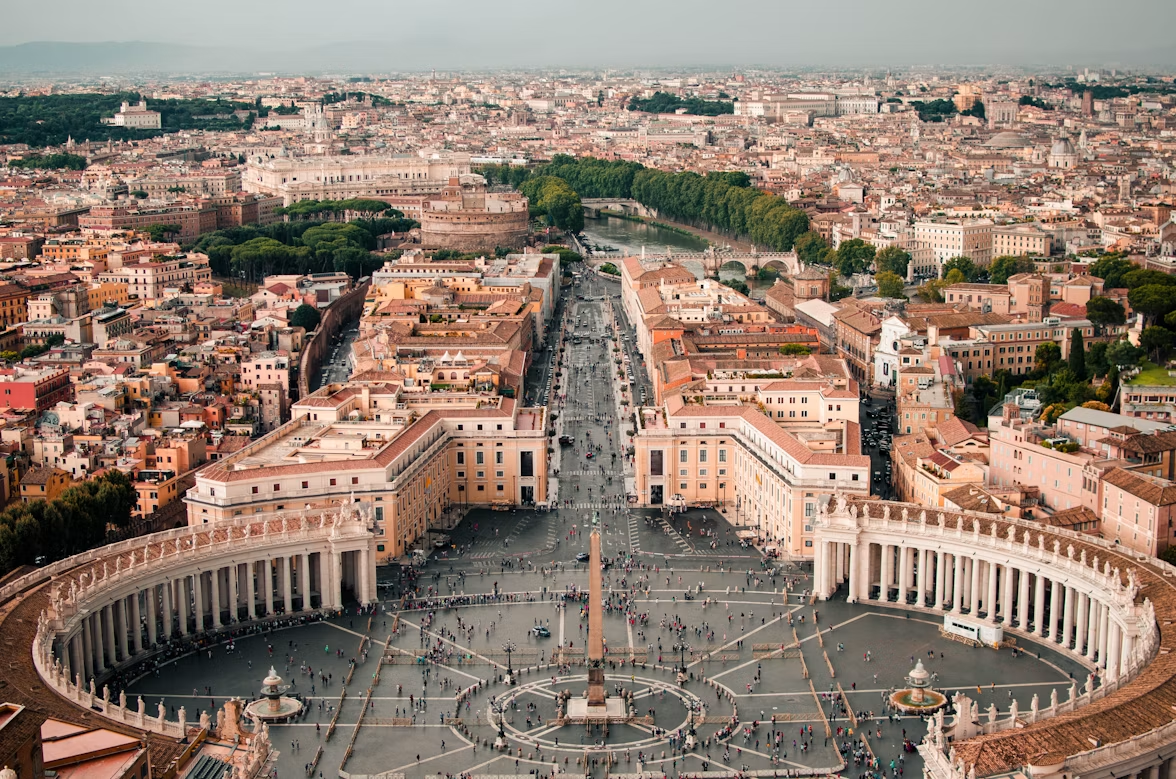
Naples → Palermo · overnight, approx. 10–11 hours
Drive back to Naples by early evening and board the overnight car ferry to Palermo with GNV or Grimaldi Lines. Between them, the two operators run a combined 9 sailings a week, and cabin accommodation is available so you can rest after three days of driving. Vehicle check-in typically closes 90 minutes before departure, and lanes are organised by height and length, so arrive with time to spare rather than cutting it fine.
There's a special pleasure to this crossing that a flight can't match. Start with a relaxed dinner on board as the lights of Naples slip away, then take a stroll on deck under a sky full of stars, far from any city glow. Australians who've gazed up at the Southern Cross from the outback will appreciate the view. By morning, you'll wake to Sicily's coastline outside your cabin window and arrive in Palermo by mid-morning, ready to head straight into the city.
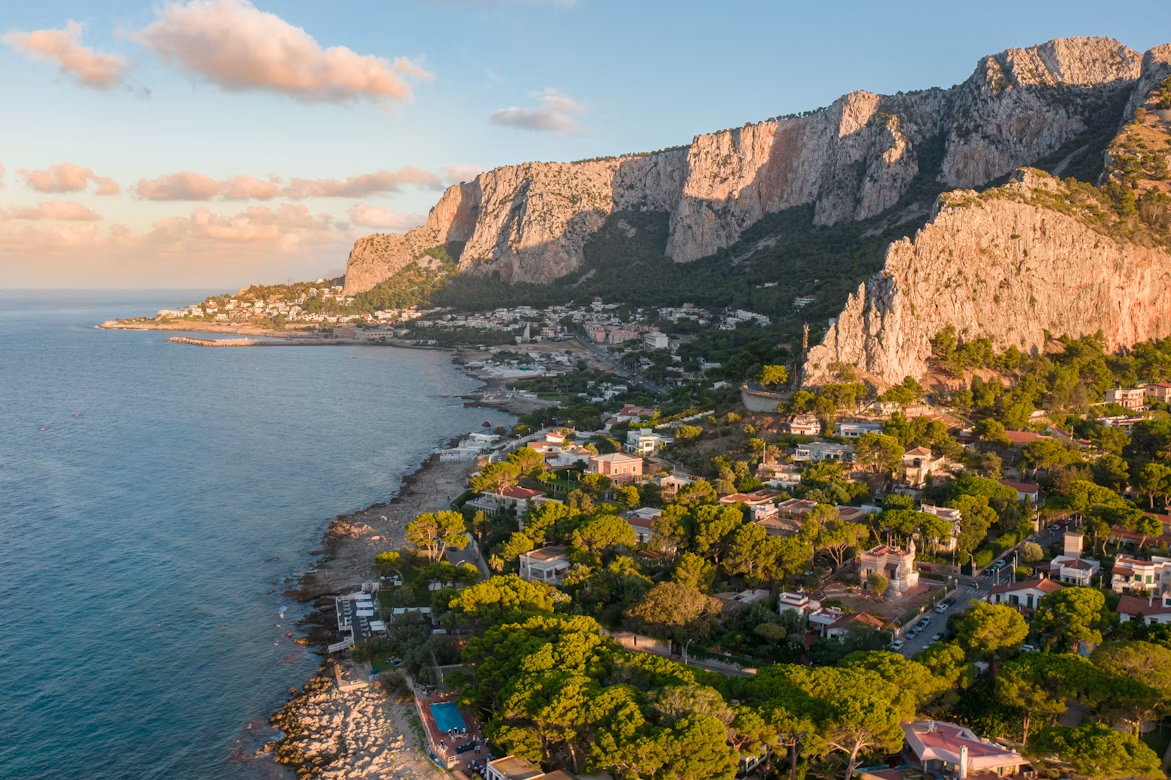
Palermo → Agrigento → Ragusa/Modica → Syracuse → Taormina · approx. 530 km
Spend your first afternoon in Palermo itself. The Capo and Ballarò street markets are as much theatre as grocery shopping, and the Norman-Byzantine mosaics inside the Cappella Palatina are among the finest anywhere in Europe. The next morning, drive southeast for 2 hours via the SS121 to Agrigento's Valley of the Temples, a ridge of Greek temples silhouetted against the sea that predates the Parthenon.
Continue to the southeastern corner of the island, where the towns of Ragusa, Modica and Noto were completely rebuilt in honey-coloured Sicilian Baroque style after a catastrophic earthquake in 1693. Modica is also the place to try the town's famous cold-processed chocolate, made using a technique brought by the Spanish that stops the sugar from fully dissolving. From there, carry on to Syracuse, where the ancient Greek theatre and the offshore island of Ortigia make an easy full day.
Finish the Sicily loop in Taormina, perched on a cliff with Mount Etna smoking on the horizon. If you have any energy left, a guided hike partway up Etna's slopes is one of the few chances anywhere in Europe to stand on an active volcano.
Sicily's autostrade (A18, A19, A20) are well maintained, but the smaller roads connecting hill towns are often narrow and unmarked. Google Maps and Waze both work well here. However, we recommend downloading offline maps in case of a patchy signal.
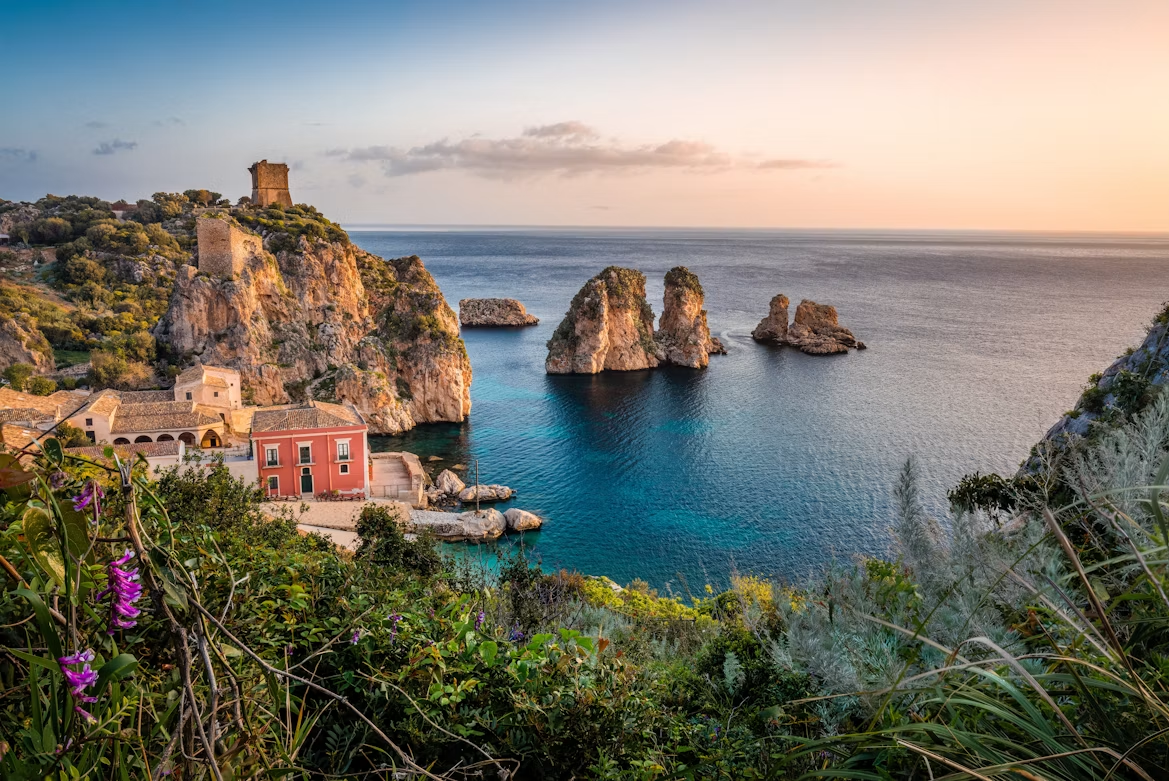
Palermo → Cagliari · overnight, 12 hours
Loop back to Palermo for a second overnight crossing. This ferry from Palermo to Cagliari runs seasonally, so confirm the schedule well ahead before booking this leg. It's the least glamorous day of the trip logistically, but it's also the only realistic way to take a car directly between Italy's two largest islands without backtracking to the mainland.
If the Palermo to Cagliari ferry isn't running when you travel, you can skip Sardinia altogether and take a car ferry back to the mainland via Livorno.
Cagliari → Costa Smeralda → Alghero · approx. 480 km
Sardinia feels quite distinct from mainland Italy, with its own language, culinary traditions and a landscape shaped by rugged granite mountains, cork forests and a dramatic coastline.
Start in Cagliari, exploring the historic Castello quarter, before heading north along the eastern coast toward the Costa Smeralda, where the sea shifts through vivid shades of turquoise. The marina towns along this stretch can be expensive, but nearby public beaches such as Cala Mariolu and Cala Goloritzé, reached by short hikes or by boat, are free to visit. Australians who grew up on the Whitsundays or the south coast of New South Wales might be surprised to find that they hold their own.
Cut across the island toward Alghero on the west coast and stop at one of the nuraghi, Bronze Age stone towers found nowhere else in the world. The most notable is Su Nuraxi near Barumini, a UNESCO World Heritage Site and the best-preserved example.
Alghero itself reflects a distinct Catalan heritage dating back to Aragonese rule, visible today in its bilingual Catalan and Italian street signs. Just outside the town, the impressive sea caves of the Grotte di Nettuno can be reached either by a steep cliffside staircase or by a short boat ride from the harbour.
Olbia → Livorno · daytime, approx. 9–10 hours
Drive north to Olbia for a daytime ferry from Olbia to Livorno with either Moby Lines or Grimaldi Lines, which takes approximately 9–10 hours. This is the most scenic of the four ferry crossings, so it's well worth grabbing a spot on the outdoor deck rather than shutting yourself in a cabin. You'll watch Sardinia's mountains recede in the morning and the Tuscan coastline sharpen into focus by late afternoon, with a good chance of spotting dolphins along the way.
Livorno → Florence → Chianti → Cinque Terre · approx. 240 km
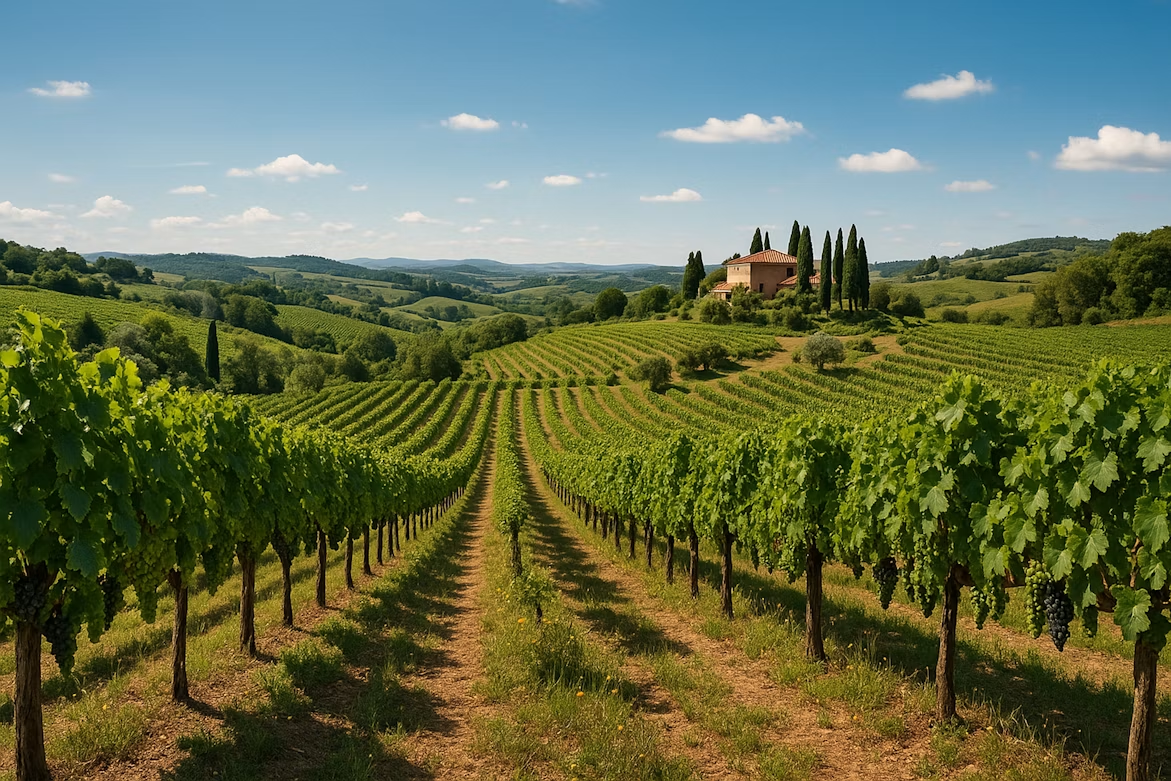
Drive inland to Florence for a day, splitting your time between the Uffizi's Renaissance masterworks and the quieter Oltrarno district, where artisan workshops still repair leather and gild picture frames the way they did five hundred years ago. Then head south into Chianti, where a slow drive along the SR222, the old Chiantigiana road, links hill towns like Greve and Castellina through vineyards that produce some of Italy's most celebrated wine. If you're a fan of the Barossa, McLaren Vale or the Yarra Valley, this is a chance to taste the old-world originals.
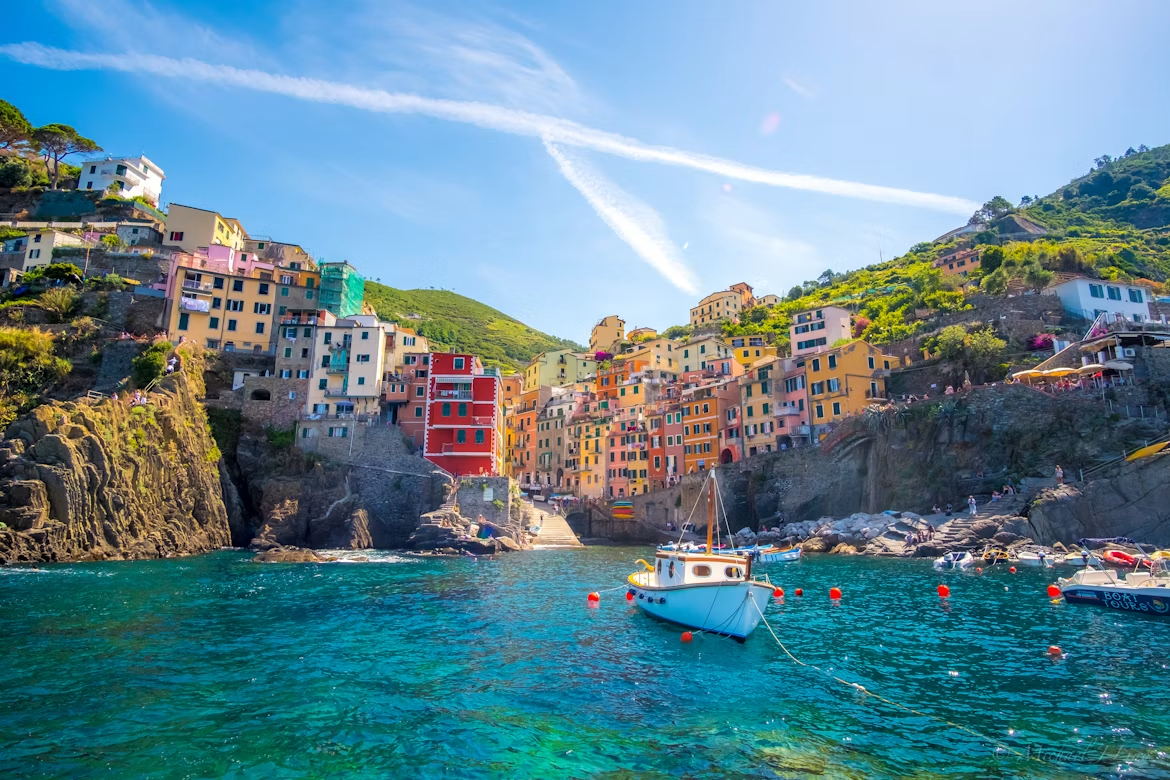
From Chianti, continue northwest to La Spezia, the main gateway to the Cinque Terre. It's best to park here or in nearby Levanto, as vehicle access to the five villages is heavily restricted and parking is extremely limited.
If you want to hike between villages, follow sections of the Sentiero Azzurro coastal trail where open. Conditions can change because of landslides, so check locally before you set out.
Piombino → Portoferraio, Elba · 1 hour each way
Backtrack slightly to Piombino for the shortest and most frequent crossing of the trip. Car ferries to Elba are available with Moby Lines, Toremar and Blu Navy, running nearly every hour in season. Napoleon spent ten months in exile here in 1814, and his modest residence, the Villa dei Mulini, is open to visitors in Portoferraio, the island's main town.
History aside, Elba has some of the clearest water on this entire itinerary and far fewer visitors than its Tuscan mainland neighbours, since most travellers never realise they can take a rental car on a boat. It's the kind of short, fun excursion that also works well as a standalone day trip.
Elba → Orvieto → Assisi → Rome · roughly 290 km
Take the ferry back to Piombino, then continue by car southeast into Umbria, Italy's green, landlocked heart and a striking contrast after days by the sea. Perched on a plateau of volcanic tuff, Orvieto is best known for its cathedral, whose mosaic-covered façade comes alive in the late afternoon sun. Beneath the town lies an extensive network of Etruscan caves and wells, which you can explore on guided tours.
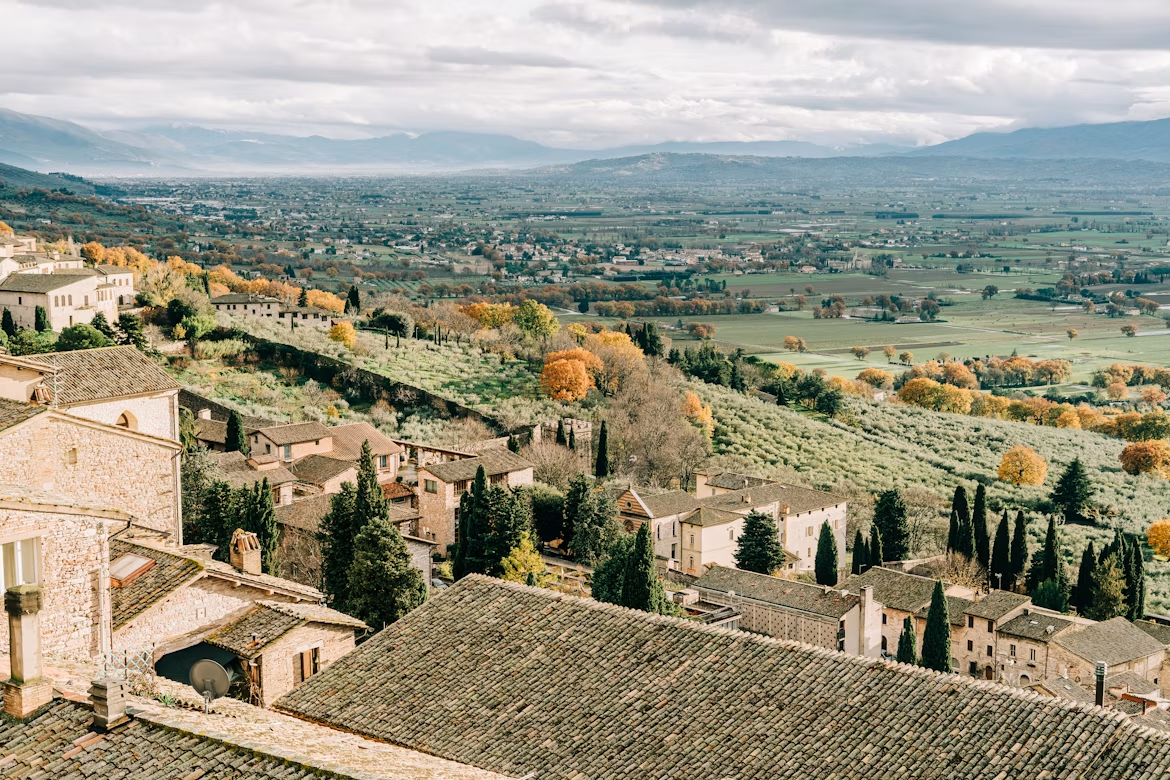
Further south, the picturesque hill town of Assisi is well worth an overnight stay. Its basilica is filled with remarkable frescoes, and at sunset the surrounding valley offers beautiful views of the town's stone buildings.
On your last day, you can drive back to Rome in under two hours from Assisi, leaving plenty of time to return the car and enjoy one last unhurried meal before the long flight home to Australia from Leonardo da Vinci International Airport (Fiumicino).
Yes, on nearly all major routes. When booking with operators like GNV, Grimaldi Lines or Moby, select a vehicle ticket rather than a foot passenger ticket, and have your car's registration and rental agreement on hand at check-in. Some rental companies restrict which ferry routes their cars can travel on, so confirm this with your rental agency before booking any crossings.
It can be trimmed to around twelve days by cutting either Sardinia or the Cinque Terre entirely and flying home via Palermo or Cagliari instead of looping back to Rome. Halving the driving time on both islands is possible, but it turns several stops into whistle-stop visits that aren't as enjoyable. Given the length of the flight from Australia, though, many travellers find it worth keeping the full eighteen days to make the most of the trip.
Expect to pay roughly A$4,300–A$6,500 per person for eighteen days, not including flights from Australia. That covers a mid-size rental car, fuel, tolls, all four ferry crossings with cabins, and mid-range accommodation. Lodging on Sardinia's Costa Smeralda and the Amalfi Coast will push that number higher if you stay in the most famous towns rather than a short drive inland.
You can do large sections by train and boat instead. Many legs of the trip, like Rome to Naples and Florence to La Spezia, are covered by rail connections, so you could pick up a rental car only for the island legs, where public transport isn't as frequent or accessible. This hybrid approach takes more planning but removes several hours of coastal driving on roads like the Amalfi SS163.
It's generally low-risk but not entirely risk-free, particularly in tourist parking areas around Positano, Taormina and Portoferraio. It's always sensible to keep valuables out of sight in the boot rather than on visible seats. Where possible, we recommend choosing accommodation with private or gated parking, which is common even in smaller towns on this route.
Plan your Italy road trip and book your ferry tickets today to start your journey with ease. Safe travels!